A small feeder that sits on the tank's lid. It runs up to eight feeds a day, keyed to the clock or to sunrise and sunset, checks that food actually fell, and keeps you posted on your phone.
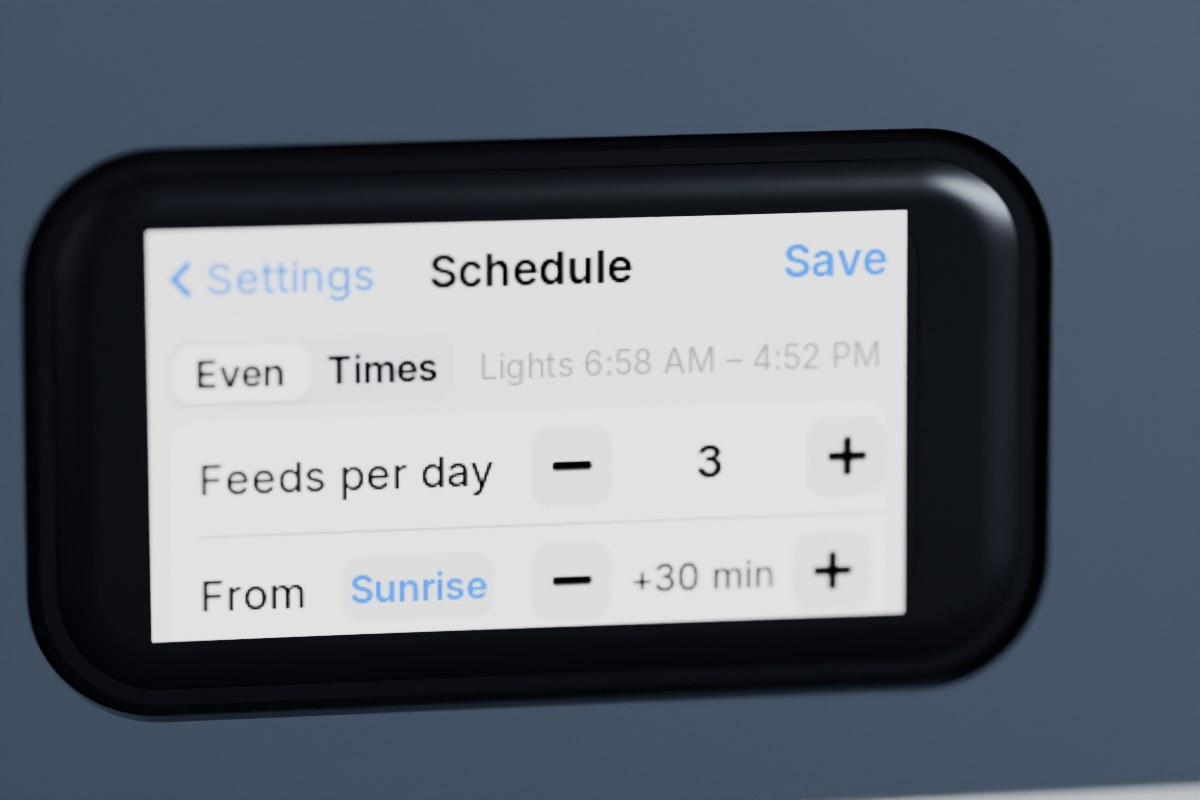
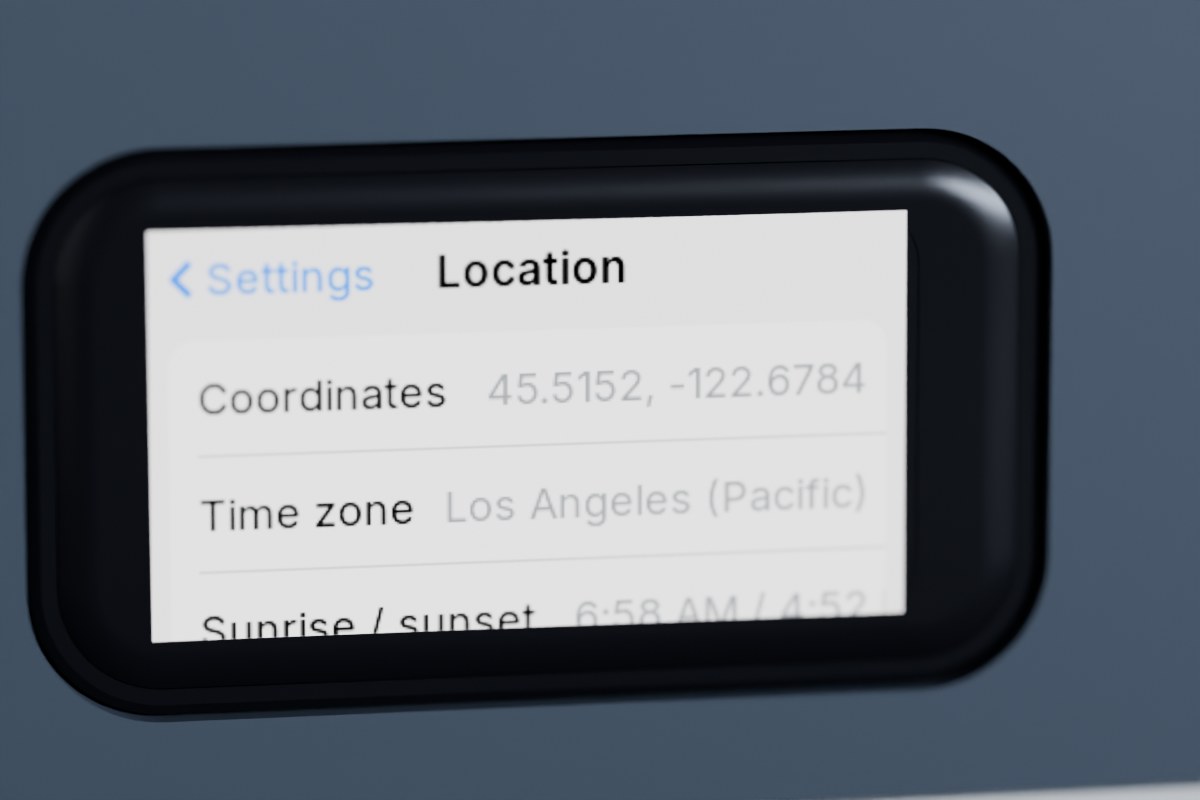
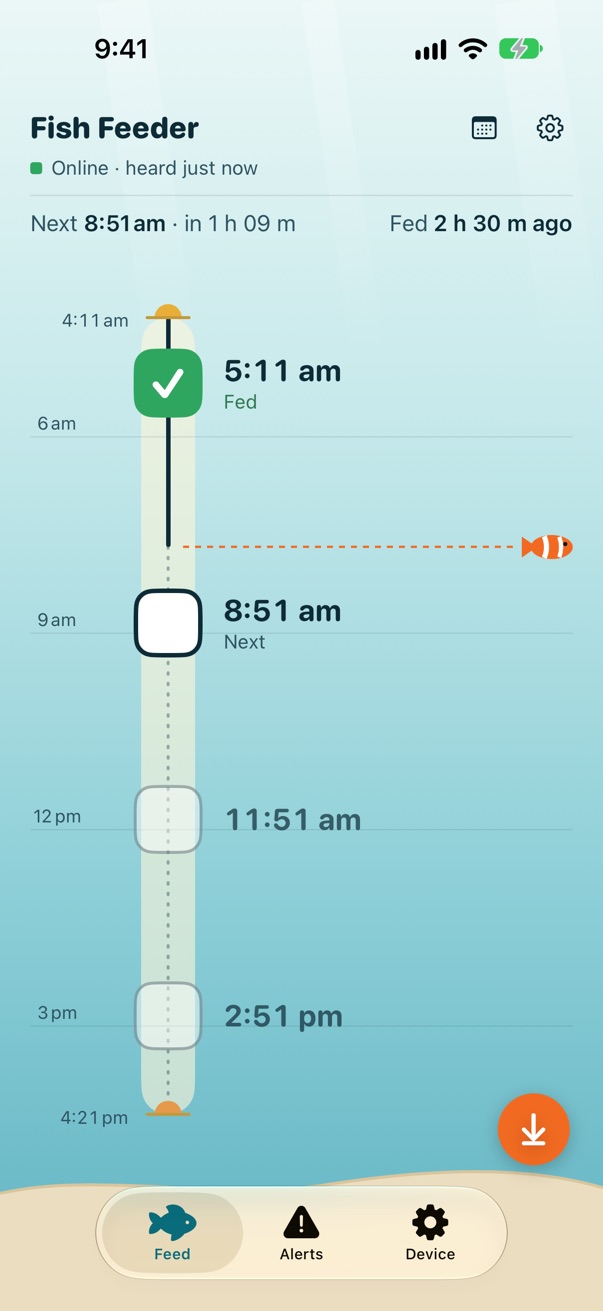
Set feeds at fixed times, or spread them evenly between sunrise and sunset. Up to eight a day.
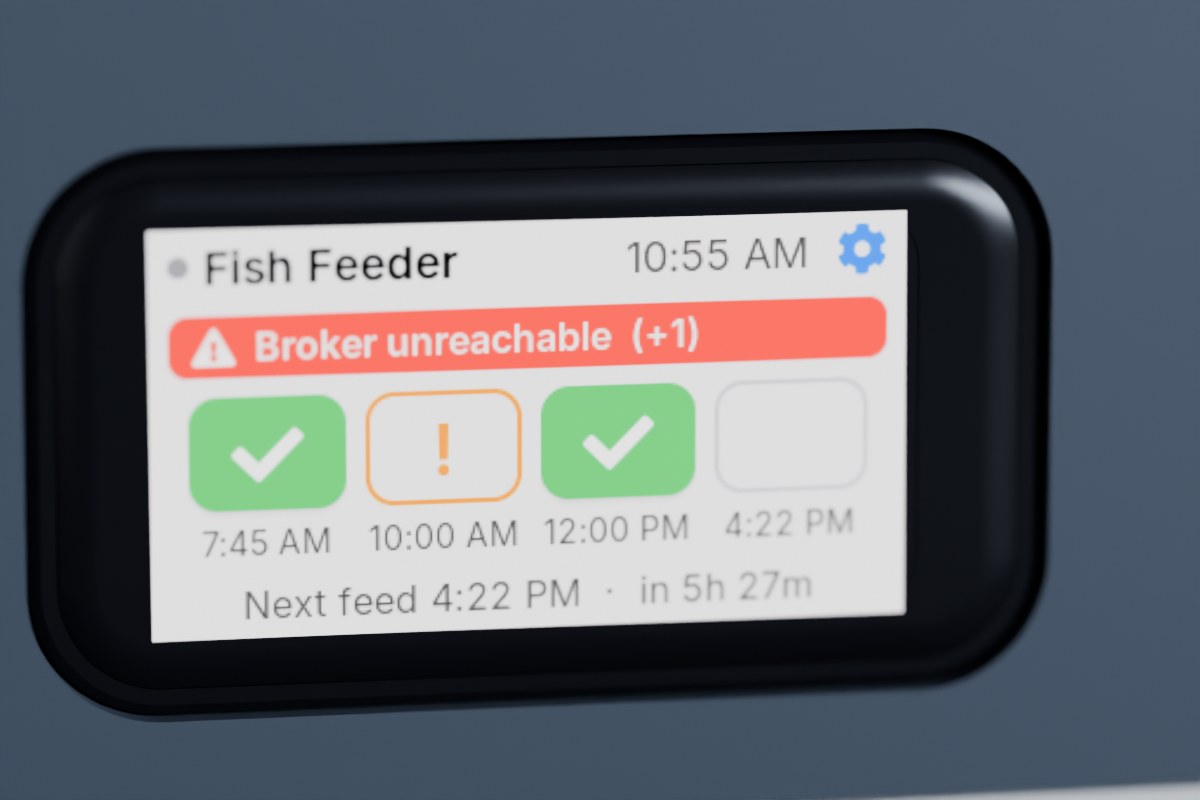
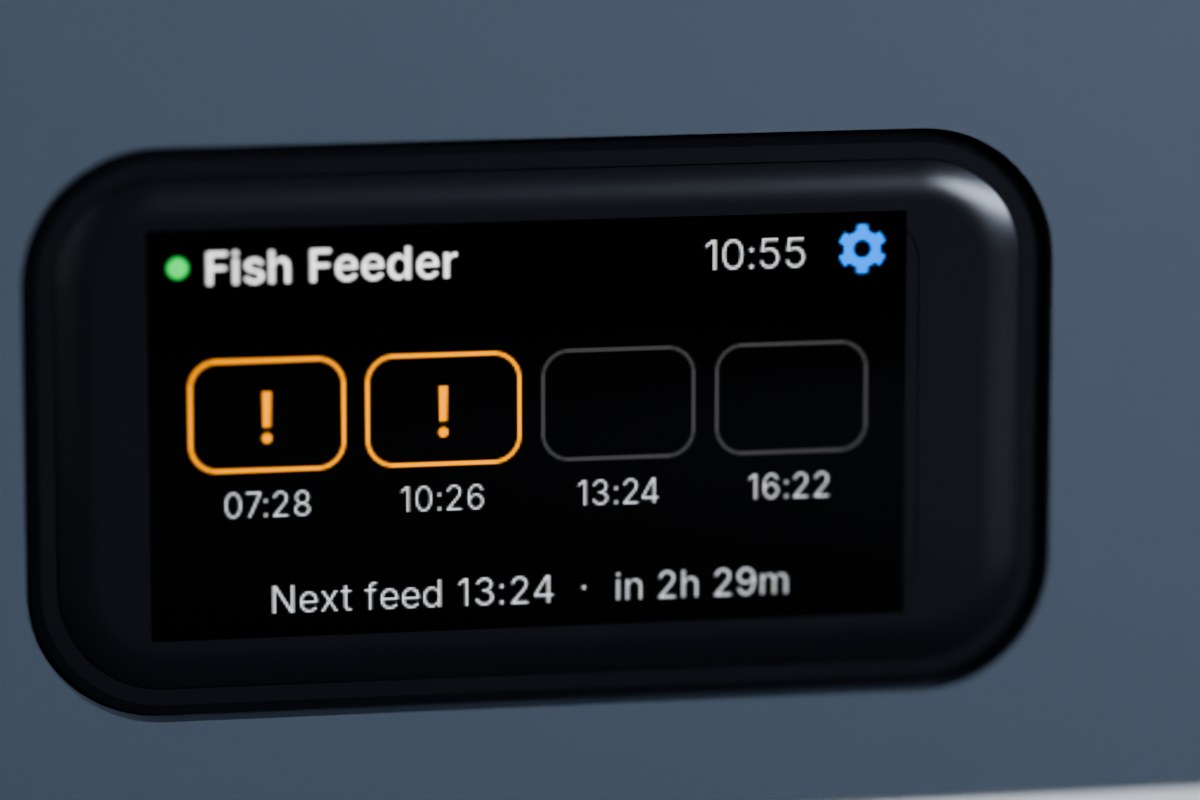
An infrared beam across the outlet sees each portion drop, and a missed feed is flagged on the screen and in the app.
A cooldown and minimum gaps between feeds stop a double tap, a stray shortcut or a bad schedule from emptying the hopper.
Schedules run on the feeder itself. Wi-Fi is only for the app, alerts and the time.
Talks MQTT and announces itself with Home Assistant discovery.
An ESP32-S3 touch module on a custom carrier board, an N20 gear motor driving an auger, and a 3D-printed body.
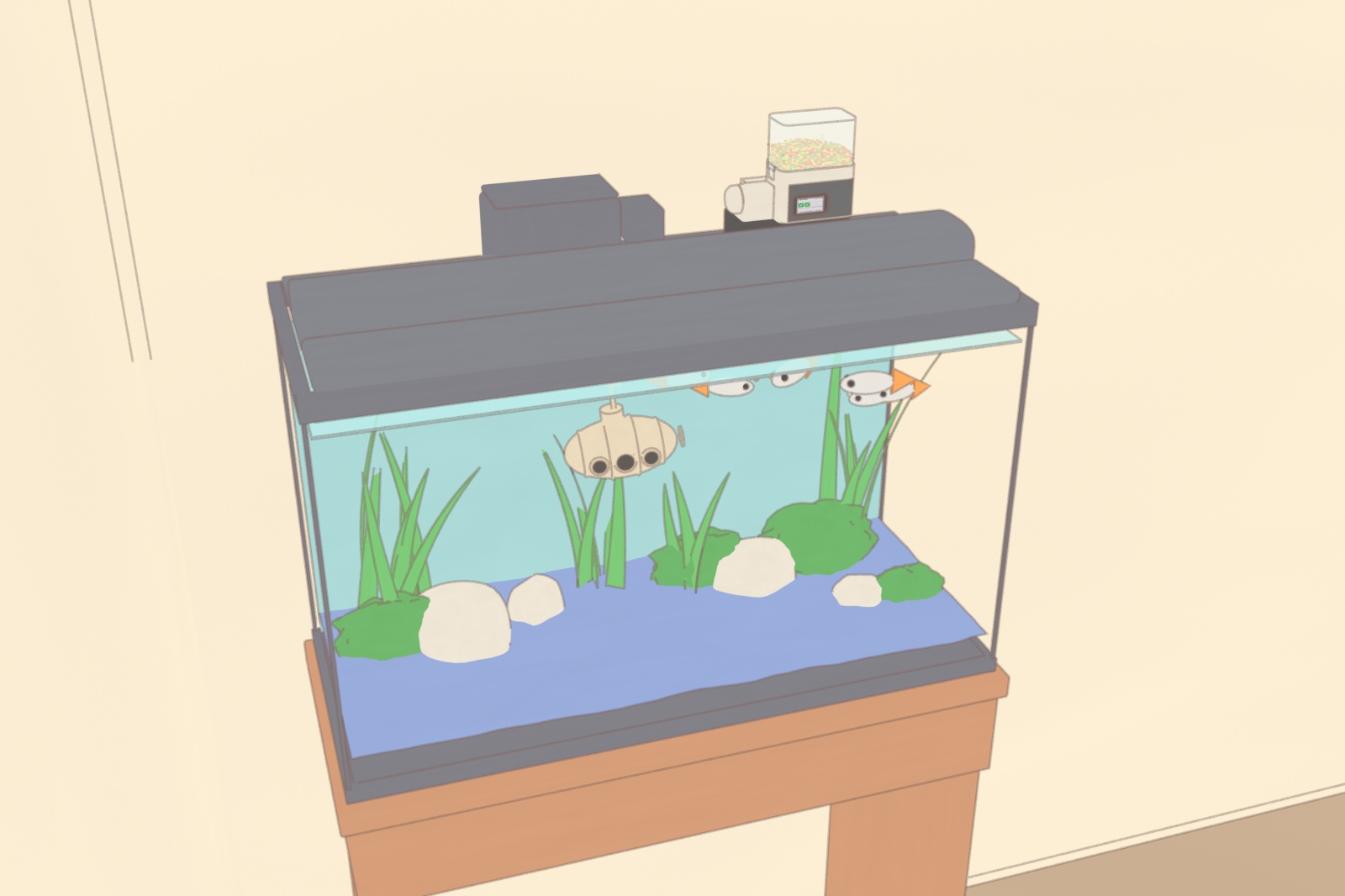
It sits on the dust cover behind the light, next to the filter, and drops food through the gap at the back. This is it on the 765 mm tank it was built for.

A 1.47-inch touch screen in the front of the feeder shows today's feeds at a glance and dims to 20% when idle. Every setting can be changed right there.


See today's feeds, feed now, edit the schedule and get alerts.

The feeder, Home Assistant and the app all talk through one MQTT broker on your home network. The feeder keeps its own schedule, so the broker can go down and feeding carries on.
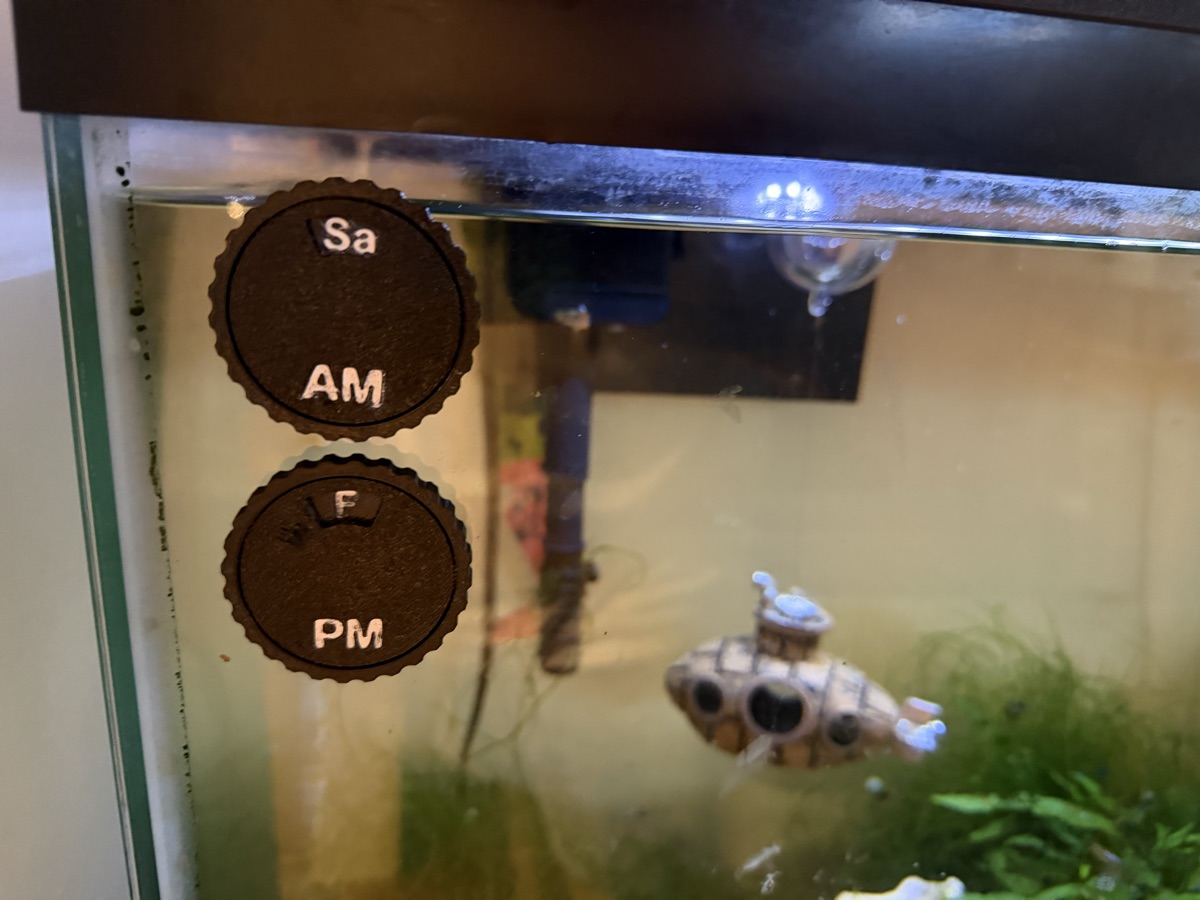
Before this, feeds were tracked by hand with printed day-and-time dials stuck to the glass. Turn one after each feed and anyone can see whether the fish ate this morning. The feeder's row of slots is the same idea, filled in automatically.
The dials are a remix of the Fish Feeder Weekday Tracker remix on MakerWorld. Cute, and they work, but the automated feeder is a big upgrade.